
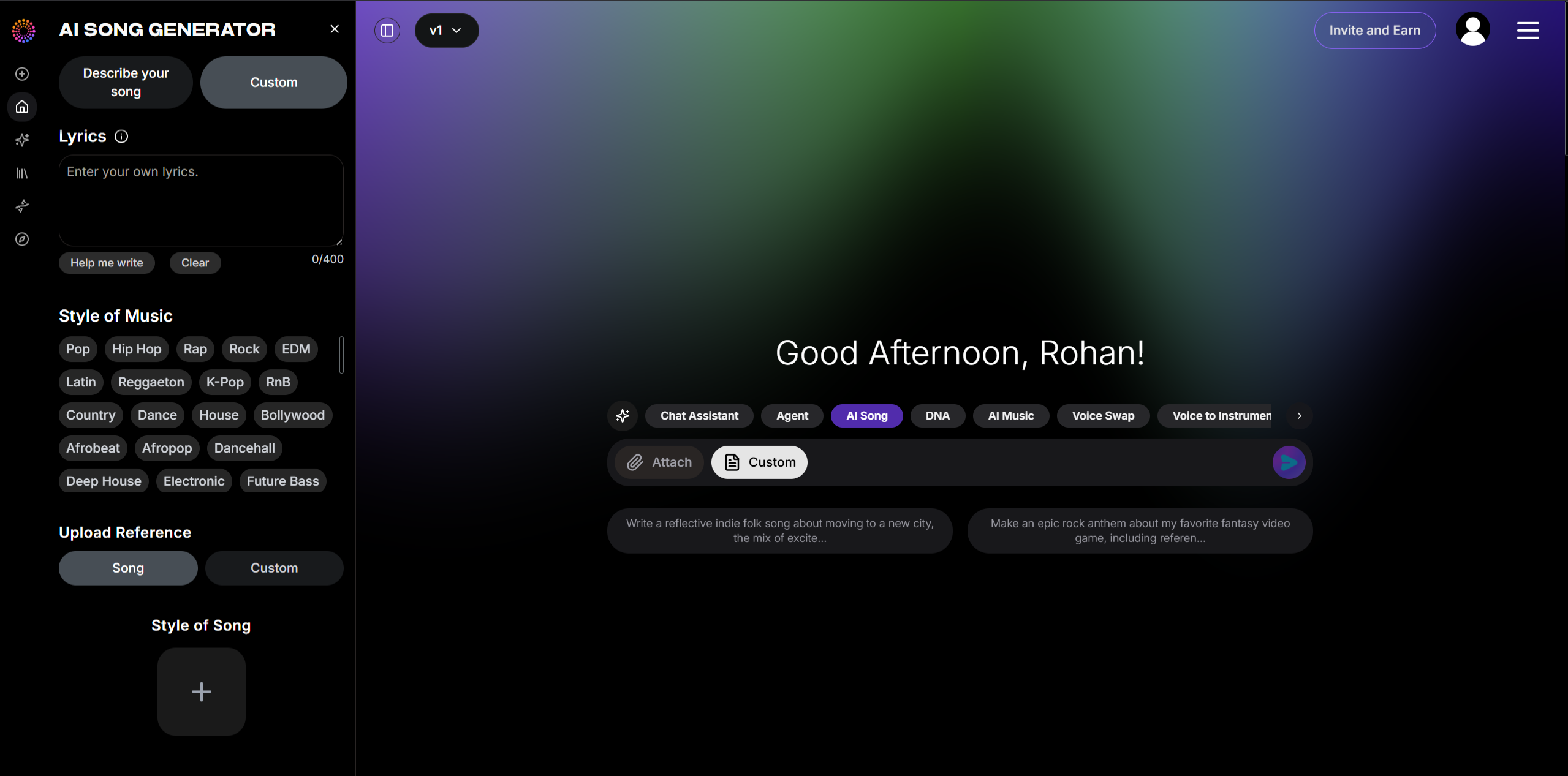
The evolution of music creation has witnessed a significant transformation with the advent of artificial intelligence (AI) in songwriting. AI song makers have emerged as powerful tools that assist musicians, producers, and hobbyists in generating melodies, harmonies, and even lyrics. This technological advancement contrasts sharply with traditional songwriting methods, which rely heavily on human creativity, intuition, and experience. Examining the differences between AI-assisted songwriting and conventional approaches reveals both opportunities and challenges within the music industry.
Traditional songwriting is an inherently human process rooted in emotional expression and personal experience. Songwriters often draw inspiration from their surroundings, relationships, or inner thoughts to craft meaningful lyrics and melodies. This method involves trial-and-error experimentation with chords, rhythms, and lyrical phrasing until a satisfying composition emerges. The process can be time-consuming but allows for deep artistic exploration. Collaboration among band members or co-writers further enriches the creative output by blending diverse perspectives.
In contrast, AI song maker makers utilize algorithms trained on vast datasets of existing music to generate new compositions automatically or semi-automatically. These systems analyze patterns such as chord progressions, melodic structures, tempo variations, and lyrical themes to produce songs that align with specific genres or moods requested by users. By inputting preferences like key signature or style-be it pop, jazz, or classical-users receive instant musical suggestions that can serve as foundations for further refinement.
One major advantage of AI in songwriting is efficiency. Musicians facing writer’s block can quickly obtain fresh ideas without starting from scratch. Additionally, AI tools democratize music creation by enabling individuals without formal training to experiment creatively. For commercial purposes such as advertising jingles or background scores where speed matters more than uniqueness or depth of emotion, AI-generated tracks prove highly practical.
However, there are limitations inherent to this technology when compared to traditional methods. While AI excels at mimicking existing styles based on learned data patterns,it lacks genuine emotional understanding-a critical component in producing resonant art that connects deeply with audiences over time. The nuances of storytelling through lyrics often require cultural context and subjective insight beyond what current machines can replicate authentically.
Moreover,the reliance on pre-existing musical data raises concerns about originality since generated outputs might inadvertently recycle familiar motifs rather than innovate truly novel sounds.Consequently,many artists view AI as a complementary tool rather than a replacement for human creativity.It serves best when augmenting traditional workflows-for instance,suggesting chord changes,aiding lyric brainstorming-or providing baseline tracks upon which musicians build personalized arrangements.
In conclusion,the rise of AI song makers represents an exciting frontier offering new possibilities alongside established songwriting traditions.Traditional methods emphasize heartfelt artistry shaped by lived experiences,and while slower,much richer emotionally.AI introduces speed,digital accessibility,and expansive stylistic versatility,but still falls short capturing authentic emotional depth fully.Synergizing both approaches may well define future trends where technology enhances but does not supplant human ingenuity in crafting memorable music compositions.